Table of Contents
For the manufacturing side of this topic, see the MOQ Guide for Fishing Brands.
Birmingham, 7:15 AM
The trade show floor hasn't opened yet. Fluorescent lights hum over empty aisles. A distributor from Birmingham , let's call him Mark , crouches next to a display bedchair, running his thumb along the hinge weld.
He doesn't say anything for a full minute. Then he stands up, nods once, and writes a note on his phone.
That weld told him more about the factory than any brochure on the table.
Mark has been buying bedchairs for twelve years.
He knows the difference between a bedchair that lasts three seasons and one that generates warranty claims by September lives in details most buyers skip: the hinge mechanism — the foam rebound rate, the stitch pattern on the mattress cover.
His shop moves maybe eighty bedchairs a year — not huge volume, but enough that one bad batch erases the margin on the previous three.
This guide is for the Marks of the trade. If you're stocking bedchairs in 2026, these are the decisions that determine whether your customers sleep well , and whether your returns rate stays below 3%.
The Product Your Customers Sleep On , Literally
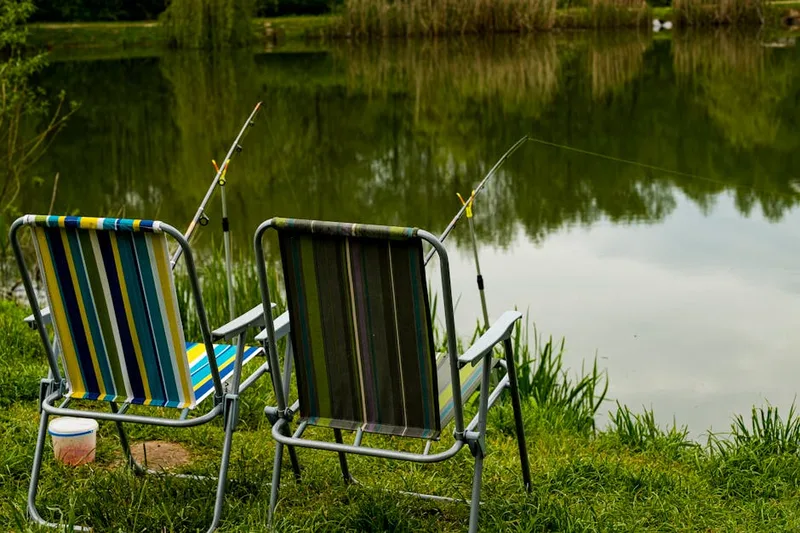
Here is something most retail buying guides won't tell you: the bedchair is the highest-risk product category in a carp fishing inventory.
Higher than bivvies. Higher than rods. Higher than luggage.
Why? Because it's the one product your customer uses for eight hours straight, unconscious, in the dark, often on uneven ground, sometimes in rain. If a rod pod wobbles, the angler notices and adjusts.
If a bedchair frame creaks at 2 AM on a 48-hour session, the angler remembers , and associates that frustration with your shop.
The bedchair is also the heaviest single item most anglers buy. Shipping a faulty unit back costs more than the margin. This means quality failures don't show up in your returns data , they show up in the angler who quietly switches shops next season.
So the buying decision matters. Here's how to get it right.
Three Legs or Six? The Question That Splits Your Stock
Bedchairs come in two configurations. The choice between them determines your stock profile.
3-leg bedchairs use a central support at the head end and two legs at the foot. They weigh less , typically 7–9 kg for a steel frame , and pack smaller.
Anglers who walk any distance from the car park to the swim prefer them. They're also cheaper to ship: three to four units fit in the same courier box that holds two 6-leg models.
If your customer base skews toward day-session anglers and short-stay carp fishing, the 3-leg is your volume product.
6-leg bedchairs have independent leg height adjustment at every corner. This matters on sloping banks and uneven swims , which is to say, most actual fishing locations. They weigh 10–13 kg and cost 40–60% more at wholesale.
They also command higher retail margins and attract the repeat customer who buys premium across categories. Stock fewer units. Charge more per unit.
Sell to the angler who already owns a £400 bivvy and isn't going to put a £60 bedchair inside it.
The practical split for a mid-size tackle shop: 70% 3-leg, 30% 6-leg. Adjust toward 6-leg if your customer base includes a high proportion of syndicate or continental anglers doing 72-hour sessions.
Adjust toward 3-leg if you serve a walk-to-the-bank, evening-session demographic. Do not split 50/50 , that's what a shop does when it hasn't thought about who its customers actually are.
Steel vs Aluminium: The Numbers Tell the Story
Frame material is where the margin conversation lives. Every buyer asks about aluminium. Most buyers make the wrong call.
Steel frames use powder-coated 19–22mm tubing, typically 0.8–1.0mm wall thickness. They weigh more , the 3-leg steel bedchair lands around 8.5 kg , but cost 35–50% less at the factory gate.
A steel bedchair with proper powder coating and welded (not riveted) joints lasts five seasons or more. The failure mode is rust at the weld points, and it's visible. You can inspect for it. Your customer can see it.
This makes quality control straightforward , if the coating is intact at the joints, the frame is fine.
Aluminium frames save roughly 2–3 kg in total weight. They cost more because aluminium tubing is more expensive and the welding requires different tooling. The failure mode is different: aluminium doesn't rust, but it fatigues.
A hairline crack at a stress point develops invisibly over months, then fails catastrophically in the middle of a session. You can't inspect for aluminium fatigue visually. Your customer can't either , until the frame collapses.
For most retailers, steel is the smarter default. The weight penalty is real. The reliability advantage is larger. Stock aluminium only if your customers specifically demand the weight saving and you're sourcing from a factory with documented fatigue testing.
If the factory can't show you cycle-test results for their aluminium welds , a machine that bends the joint fifty thousand times and records every measurement , don't order aluminium. Order steel and sleep better.
The Mattress Is the Bedchair
The frame gets the attention. The mattress earns the loyalty.
A bad mattress on a good frame makes a bad bedchair. A good mattress on an average frame makes a product anglers recommend. Here is what to check:
Foam density. Same principle as a fishing mat: 28–32 kg/m³ is the range. Below 28, the foam compresses permanently. The angler who weighs 90 kg will bottom out within weeks.
Above 32, shipping weight climbs and the mattress feels stiff in cold weather. Ask the factory for the density spec in writing. If they hesitate, the foam is whatever their trading company had in stock that week.
Cover fabric. 600D Oxford polyester with a water-resistant backing. Zips at the cover edge , ideally YKK or equivalent branded , for removal and washing.
The cover should have a non-slip base panel; a mattress that slides off the frame at 3 AM generates exactly the kind of word-of-mouth that no retailer wants.
Stitching at the tufted points. Most bedchair mattresses have tufted sections , stitched-through points that keep the foam from shifting inside the cover.
If those stitch points pull out, the foam bunches, the mattress develops lumps, and the product is effectively dead. Check the tufting on a sample: tug firmly at each tufted point. If the stitch moves, reject the batch.
One specification that separates good bedchairs from the rest: rebound rate. After 8 hours of compression by a 90 kg angler, how long does the foam take to return to its original thickness? Good foam: under 30 minutes.
Average foam: 1–2 hours. Cheap foam: never fully recovers. This matters for multi-night sessions, where the angler sleeps on the same mattress for two or three consecutive nights. Ask the factory for a compression-recovery test result. Most can't provide one.
The ones that can are the ones worth dealing with.
OEM on a Platform That Nobody Sees
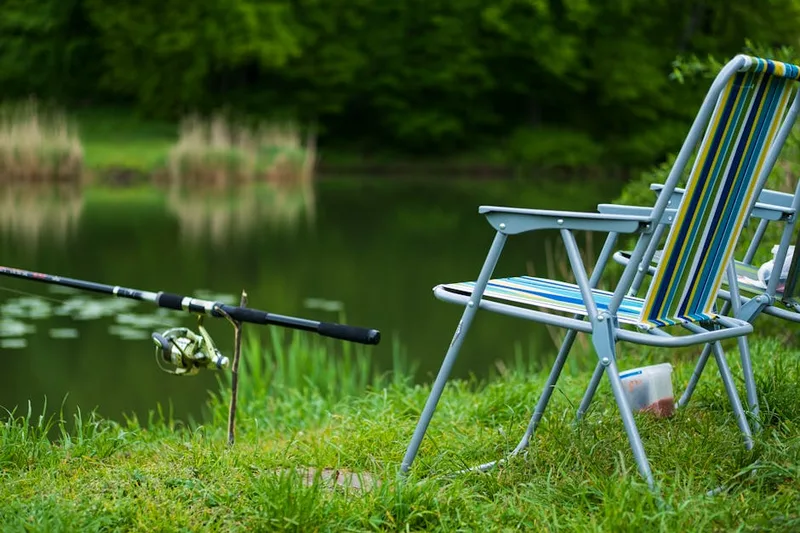
Private-label bedchairs present a specific challenge: the bedchair is the one product where your brand sits mostly hidden. The angler covers it with a sleeping bag. The frame is underneath. The logo you paid to embroider on the headrest disappears under a pillow.
This doesn't mean OEM doesn't work on bedchairs. It means you spend the brand budget differently.
Put your logo on the carry bag. The carry bag is what the customer sees at the car park, at the tackle shop, walking to the swim. It's what the angler next door notices. The carry bag is your billboard , the bedchair inside just needs to work.
Other OEM decisions that matter more than the logo: - Zip colour on the mattress cover. A bright, branded zip pull is visible in photos and on the bank. It costs pennies. - Frame colour.
Powder coating in your brand colour costs roughly £2–3 per unit at volume. It's the single most visible differentiator in a shop display. - Strap quality on the carry bag. Padded shoulder strap vs thin nylon webbing.
The padded strap costs £0.60 extra. The angler feels it every time they carry the bedchair. It's their first physical experience of your product quality , make it good.
For broader guidance on sourcing sleeping systems, see our 5-season sleep systems guide. And if you're comparing bedchairs against standard fishing chairs for your inventory mix, the carp chair vs bed chair comparison lays out the unit economics.
How to Test a Bedchair Without Sleeping on It
Manufacturer evaluation for bedchairs comes down to three tests that don't require a factory visit.
One: the hinge cycle. Open and close the bedchair ten times, quickly. Does the mechanism stick on fold number seven? Does the locking pin seat cleanly every time?
A hinge that misbehaves on the tenth cycle in a showroom will fail on the two-hundredth cycle on a muddy bank in October. The factory should provide a cycle-test rating , ask for it.
Anything below 10,000 rated cycles is a product built for occasional use, not for carp fishing.
Two: the loaded wobble. Set the bedchair up on a hard floor. Press down firmly on one corner with 15–20 kg of force , roughly the weight shift of a sleeping angler turning over. Does the opposite corner lift?
Does the frame twist? A bedchair that wobbles under 20 kg on a flat floor will be unstable on a gravel swim under 90 kg of angler. The frame should stay planted on all legs through the press.
Three: the morning-after creak. Set up the bedchair. Apply weight for 30 seconds. Remove the weight. Does the frame creak when you shift it? Silence is the target. Creaks develop at loose rivets and under-torqued bolts.
They only get louder with use. A silent frame on the showroom floor is a silent frame after 50 nights on the bank.
If the factory can't send you a sample that passes all three tests, do not place an order. The bedchair category doesn't forgive margin-of-error thinking.
Conclusion
Bedchair procurement is not about finding the cheapest FOB price. It's about finding the factory that controls its foam spec, tests its welds, and can ship a batch where every unit feels identical to the sample. That factory exists.
It's rarely the one with the lowest quote. It's the one that answers the density question within thirty seconds, sends you random batch samples without argument, and knows its hinge mechanism has been cycled ten thousand times.
Stock from that factory. Your customers won't know why your bedchairs last longer. They'll just keep buying them.
Sources & Industry References
- Carpology Magazine , Leading European publication for carp fishing gear reviews and industry news
- International Game Fish Association (IGFA) , World records, fishing standards, and angling regulations
- Statista: Fishing Industry Data , Market size, trends, and consumer spending on fishing equipment
Looking for Bedchair Manufacturers?
We work with distributors across Europe on OEM bedchair programmes , from 3-leg steel workhorses to 6-leg aluminium platforms , with documented foam specs and cycle-tested frames.
Contact Us to Discuss Your Requirements