Table of Contents
The Retailer's Real Problem
It's six-thirty in the morning. You're at the back of the shop before the kettle's even boiled. A pallet arrived late yesterday, and you're finally getting into it — slitting tape, pulling out the first few units, running your thumb along the seam of a weigh sling you've been waiting three weeks for.
Then you feel it.
A frayed edge where the handle joins the mesh. Not catastrophic, not a hole — just that subtle, slightly sick feeling that tells you the stitching density was wrong and whoever QC'd this batch wasn't paying attention. You hold it up to the strip light. Yeah. That's going back.
Now multiply that by twelve units in the box, a reorder that won't arrive for another month, and a customer who specifically asked for those slings for a club order.
This is the real problem for tackle retailers and distributors sourcing fish care accessories at volume. It's not the price. It's the inconsistency. One batch is fine. The next one has handle webbing that stretches on first use, or a zip that jams in the cold, or mesh that holds water like a sponge instead of draining clean. When you're buying bulk weigh slings for retailers — stocking shelves, fulfilling club orders, building your own private label range — you need a supplier whose quality doesn't wander between production runs.
That's what we're going to talk about today.
Why Fish Care Gear Is a Quiet Profit Center
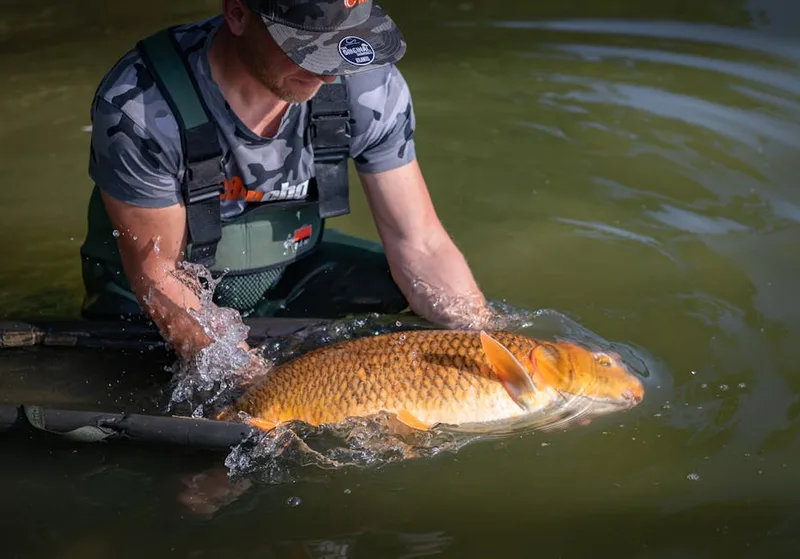
Ask any experienced tackle buyer where the real margin sits, and they'll usually say the same thing: it's not the rods. It's not even the reels. It's the accessories — the stuff anglers buy after they've made the big purchase, the kit they replace every season, the gear they buy twice because they left one at the lake.
Fish care accessories sit right in that sweet spot.
A weigh sling. A carp unhooking mat. A tub of antiseptic. A retaining sling for overnight sacks. These are consumable-adjacent products — they wear out, they get muddy, they fade, they eventually fail. And because fish welfare has moved from a niche concern to a mainstream one across Europe and the UK, anglers are increasingly willing to spend properly on this category. They want quality. They want gear that actually protects the fish and holds up session after session.
For you as a retailer or distributor, that shift is an opportunity.
The margins on fish care accessories are genuinely solid when you're sourcing direct from a carp fishing weigh sling manufacturer rather than passing through a middleman. The price points are accessible enough that customers don't overthink the purchase — but the category is specific enough that they'll keep coming back to the brand or store that served them well last time. Loyalty is easier to build here than in almost any other tackle category.
And it goes beyond the weigh sling itself. Think about the ecosystem: weigh sling and carp mat sets, retaining systems, weigh bars, care kits. Anglers buy these together, or they buy the mat first and the sling next trip. Bundle the category well and you're building basket size without discounting.
Quiet profit center? Absolutely. Most retailers haven't fully woken up to it yet.
What Separates a Reliable Bulk Supplier from a Middleman
Here's the honest version of this conversation.
A lot of what gets sold as "direct from factory" in the fishing accessories space is actually one or two steps removed. Someone's buying from a factory, adding their margin, and reselling to you. That's not inherently wrong — but it means you have no real visibility into materials, no ability to request specification changes, and no one who can actually answer a technical question about stitching thread weight or mesh denier.
A genuine weigh sling wholesale supplier — a manufacturer, not a broker — is a completely different relationship.
So what should you actually look for in the product itself? A few things matter more than the rest.
Material quality. The mesh on a weigh sling needs to drain fast and dry reasonably quickly. Quick-dry mesh isn't just a marketing term — it genuinely affects fish welfare and user experience. Waterlogged slings are heavier, harder to handle, and take longer to pack away. Ask your supplier what the mesh spec is. If they can't tell you, that's a signal.
Stitching density. This is where cheap batches usually fail first. High-stress points — where handles attach, where the zip runs, where the base panel meets the side panels — need reinforced stitching. Double-stitched seams at the handles aren't optional for a product that's regularly supporting fish in the 20–30lb range.
Reinforced handles. Webbing width, handle loop construction, the way the handle is anchored to the sling body — these details separate a product that lasts two seasons from one that starts pulling apart after six uses. Hold the handle, load it, feel whether it gives.
Consistent lead times. This one's underrated. A supplier who delivers on time 95% of the time is worth more than one who occasionally hits a great price but ships late half the year. When you're planning seasonal stock — spring and summer are peak carp fishing months — a delayed delivery isn't just annoying, it's lost sales.
The best B2B fish welfare equipment suppliers in Europe understand that their job isn't just to make a product. It's to make the same product, to the same spec, every single time.
OEM & Private Label: Turning Accessories Into Your Brand
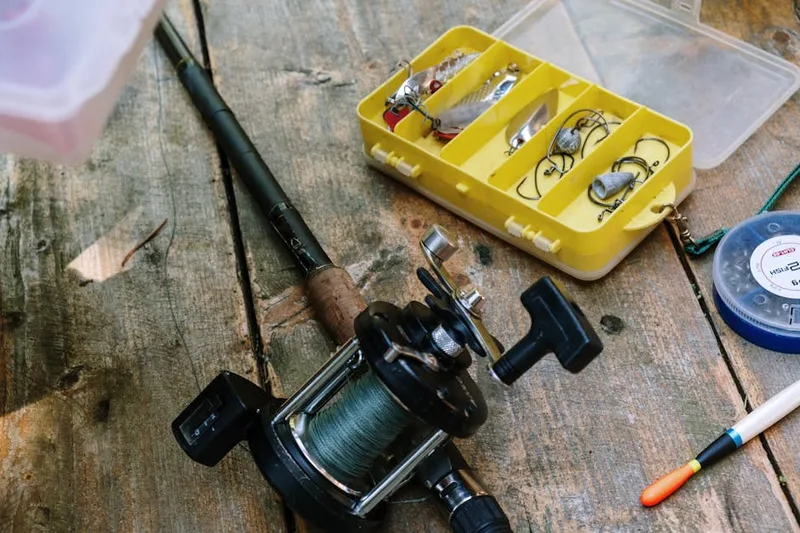
This is where it gets interesting.
If you're already buying weigh slings and carp mats at volume, you're probably already building a customer base that trusts your curation. Why are those products carrying someone else's brand? With fish care accessories OEM, you can change that — and it's more accessible than most retailers realise.
Custom branded fishing accessories don't require enormous MOQs or lengthy development timelines when you're working with the right manufacturer. Here's roughly how the process works with a proper OEM partner.
You start with a brief — colourway, logo placement, any specific feature requests (say, a particular handle configuration, a specific zip type, a colour-coded size system for your range). The manufacturer's team works with you on a sample. You review it, request changes if needed, approve it. Then production runs to that spec.
Packaging is part of it too. Custom polybag printing, swing tags, even retail-ready display packaging — these details matter when you're putting your brand in front of customers. A weigh sling in a plain bag says "generic." The same sling in branded packaging with your logo and a clean product description says "we thought about this."
MOQ flexibility is worth asking about directly. For fishing tackle accessories private label, minimum order quantities vary quite a bit between manufacturers. Some will work with you on smaller initial runs to prove the product before you commit to a full seasonal buy. That's the kind of partner worth finding.
The sample workflow matters too. A good OEM manufacturer will be clear about sample lead times, sample costs (some offset against the first production order), and how many revision rounds are realistic. Vague answers here are a red flag.
How Anglingear Supports Distributors
At Anglingear, we work with retailers and distributors across Europe and the UK who are building out their fish care ranges — whether that's stocking our existing products or developing custom lines under their own brand.
We're not going to make inflated claims here. What we can tell you is how we actually work.
We have dedicated account coordination for wholesale and OEM clients. That means you have a consistent contact, not a rotating helpdesk. When you're planning a seasonal buy or working through a sample revision, you're talking to someone who knows your account and your product.
We have an in-house R&D feedback loop — meaning when customers flag issues or request features, those conversations actually reach the people making decisions about materials and construction. If you've been frustrated by suppliers who take feedback and then change nothing, that's the difference.
And we work with flexible production batches. We understand that a regional distributor has different volume needs than a national chain, and we structure our OEM programmes accordingly.
Quick Buying Guide for First-Time Bulk Buyers

If you're new to sourcing weigh slings and fish care accessories at wholesale volume, here's a practical starting point.
What to test before you commit to a full order:
Request samples. Load the handles. Submerge the mesh and time the drainage. Check the zip under cold water. Inspect the stitching at stress points under decent light. These aren't complicated tests — they're just the ones that predict real-world durability.
What to ask your supplier:
- What mesh spec are you using, and what's the dry time?
- What's the stitching thread weight at handle attachment points?
- What's your standard lead time for a production run of X units?
- Do you offer OEM/private label, and what's the minimum run?
- Can you provide references or examples of previous OEM work?
Red flags:
A supplier who can't answer material questions. Vague lead time commitments ("usually about four to six weeks, depends"). No sample process — just "send us your order." No flexibility on specification. These aren't deal-breakers on their own, but two or three together and you're probably looking at a middleman with limited control over what they're selling you.
One more thing: don't let price be the only filter. The difference in unit cost between a cheap weigh sling and a properly made one is often smaller than you'd expect. The difference in return rates, customer complaints, and brand damage is not.
Conclusion
Fish care accessories aren't a secondary category anymore. Anglers across Europe take welfare seriously, and they're spending accordingly. For retailers and distributors, that means a genuine opportunity — in margin, in loyalty, and in brand differentiation — if you're sourcing from the right place.
The right place is a manufacturer who controls their materials, maintains consistent quality across production runs, and can actually support you when you want to build something under your own name. That's what OEM in this space should look like.
Whether you're looking for a weigh sling and carp mat distributor relationship, a private label programme, or just a more reliable bulk supply of fish care accessories, the conversation starts with finding a partner who understands what you're building.
We'd love to be that partner.
Head over to [anglingear.com](https://anglingear.com) to explore our OEM and private label options, request samples, or talk to our wholesale team about what you're looking for. No hard sell — just a proper conversation about what works for your business.
Explore OEM & Private Label Options
Whether you are looking for a weigh sling and carp mat distributor relationship, a private label programme, or just a more reliable bulk supply of fish care accessories — the conversation starts with finding a partner who understands what you are building.
Contact Anglingear Wholesale Team