Table of Contents
- Why Chair Quality Defines Your Store's Reputation
- What Matters in a Wholesale Fishing Chair
- Common Weak Points to Check Before You Order
- Fabric, Frame, and Feet: The Details That Matter
- Size, Weight, and Transportability
- OEM and Private-Label Opportunities for Retailers
- How to Evaluate a Bulk Chair Manufacturer
- Conclusion
Last March, a distributor walked our production floor during a factory audit. Sixty units of aluminium fishing chairs lined up for final QC , frames welded, fabric tensioned, leg adjusters fitted. This is covered in more depth in the Private Label Fishing Equipment Guide.
She picked up the third one off the rack, sat in it, shifted her weight twice, and said: "The crossbar flex is different from the last batch. Same spec sheet?" Same spec sheet.
Different tube wall thickness , 1.2mm instead of 1.5mm. The kind of call that only gets made when you've handled enough chairs to feel the difference before it becomes a customer return.
Retailers don't just need a chair that looks comfortable on the shop floor.
They need a product that holds up through three seasons of abuse, fits into a van full of weekend warriors, and doesn't come back through the door six months later with a broken leg or a torn seat.
When you're ordering fishing chairs by the container load, consistency is everything. One bad batch can turn a reliable SKU into a headache of returns, warranty claims, and lost margin.
That's why this guide is written for distributors, tackle shop owners, and online retailers who buy at volume. Not the angler sitting by the water. The person standing behind the counter trying to give that angler a chair they won't regret.
Why Chair Quality Defines Your Store's Reputation
Most anglers don't wake up thinking about fishing chairs. They think about rigs, baits, and swim choice. The chair is an afterthought , until it breaks.
When a customer buys a chair from your shop and the frame buckles on session three, they don't write an angry email to the factory in Ningbo. They walk back into your store. And they tell their mates.
In the tight-knit world of carp and coarse fishing, word travels fast. A single faulty batch can erode trust faster than a missed bite.
A solid chair that lasts three seasons becomes a silent ambassador for your brand. Customers remember where they bought it. They come back for alarms, bivvies, and sleep systems. The chair is often the gateway product that builds long-term loyalty.
For retailers buying in bulk, this means your manufacturer's quality control is your quality control. You won't be there when the frame is welded. You won't see the batch of fabric before it's cut. So your due diligence at the sourcing stage is the only protection you have.
What Matters in a Wholesale Fishing Chair
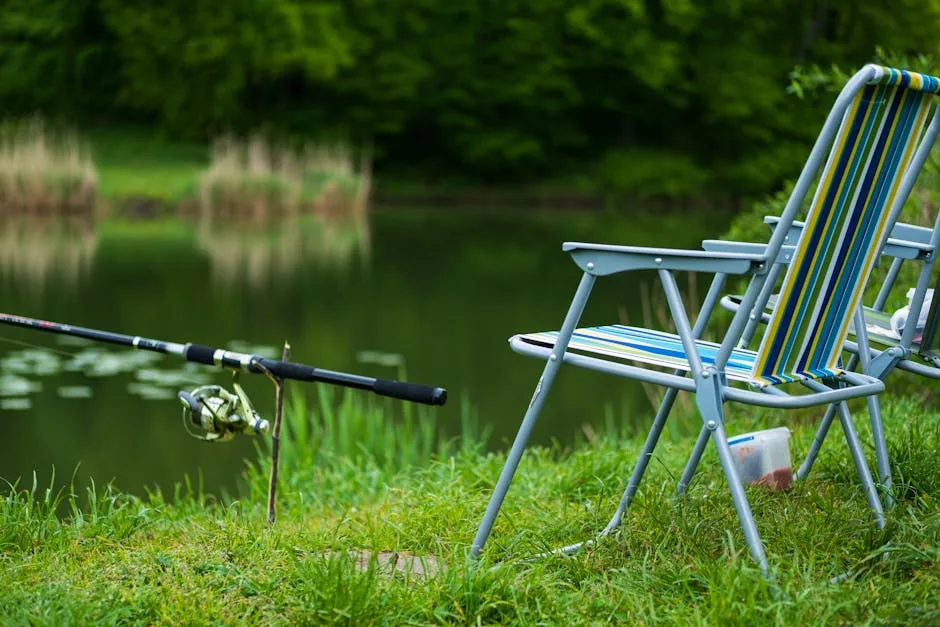
The consumer market is flooded with options: recliners, bedchairs, feeder seats, lightweight stalking chairs, and all-in-one sleep systems. But when you're buying for resale, you need to narrow the field to products that suit your customer base and your margin structure.
Target Use Case
Match the chair to your market. Urban match anglers want compact, affordable feeder chairs that fit in a hatchback. Specimen carp anglers want wide, padded bedchairs they can sleep on.
Continental retailers often prefer modular chairs with accessory packs , side trays, rod holders, and umbrella attachments , because anglers there buy the ecosystem, not just the product.
Margin and Price Band
Without naming figures, most retailers work within specific price bands: entry-level under a certain threshold, mid-range with added padding or adjustability, and premium with memory foam or lightweight alloy frames. Know your band before you source.
A distributor who tries to stock every price point usually ends up overcommitted on slow-moving SKUs.
After-Sales Simplicity
Chairs with fewer moving parts mean fewer warranty claims. A static frame chair with standard bolt-on accessories is easier to support than a recliner with internal cable tensioners and proprietary hinges. If you're selling online, simple also means fewer "how do I adjust this?" emails.
Common Weak Points to Check Before You Order
If you're visiting a factory or reviewing sample chairs, these are the failure points that show up first in customer returns:
Leg Joints and Weld Points
The junction between the frame legs and the seat base takes the most stress. Check whether the joint is a single weld, a reinforced gusset, or a bolt-through design. Single-welded joints on cheaper chairs often crack under repeated loading, especially if the user is heavier or the ground is uneven.
Seat Fabric Attachment
How is the fabric fixed to the frame? Is it a continuous sling stitched around the perimeter, or a flat panel bolted at four corners? Sling designs distribute weight better but are harder to repair if the stitching fails. Bolted panels are easier to replace but can sag over time.
Swivel and Locking Mechanisms
Any chair with a swivel seat or adjustable backrest introduces moving parts. Test the locking mechanism ten times in succession. Does it still feel crisp? Is there play in the joint? Plastics degrade in UV and cold; metal detents are more durable but cost more to manufacture.
Feet and Ground Contact
Mud feet, wide-base stabilisers, and levelling adjustments matter more than most buyers expect. A chair that sinks into soft ground frustrates anglers and leads to negative reviews. Look for chairs with broad, detachable mud feet or levelling leg extensions.
Fabric, Frame, and Feet: The Details That Matter
Frame Materials
Most wholesale fishing chairs use either powder-coated steel or aluminium alloy.
- Steel frames are heavier and cheaper. They're fine for static fishing where the chair stays in one swim all weekend. The downside is weight , a steel-frame bedchair can exceed 8–10 kg, which matters for anglers who walk long distances or retailers shipping by courier.
- Aluminium alloy frames reduce weight by 30–40% but cost more to produce. They're essential for feeder and stalking chairs where portability is a selling point. Check whether the alloy is 6061 or 7005 series; the latter is stronger but harder to source from generalist factories.
Fabric Types
- 600D Oxford polyester is the baseline. Durable, water-resistant, and cheap. Fine for entry-level.
- Padded 600D with PE foam backing adds comfort without much cost. Good for mid-range.
- Breathable mesh panels reduce sweat in summer. Popular on higher-end chairs but harder to clean.
- Memory foam or fleece-lined top layers sit at the premium end. They feel luxurious but add manufacturing complexity because the foam must be bonded and sealed to prevent water absorption.
Feet and Ground Adaptation
Broad, articulating feet are a must for UK and northern European markets where banks are often soft, wet, or clay-heavy. Some factories offer interchangeable foot sets , standard flat feet for hard ground, wide mud feet for soft banks.
Offering both in the box is a small cost adder that becomes a strong selling point for retailers.
Size, Weight, and Transportability
Retailers often overlook how a chair folds and packs. The end customer does not.
- Folded dimensions matter for car boots, barrows, and retail display space. A chair that folds flat to 80 × 60 cm is easier to stock and ship than one with protruding armrests or non-detachable accessories.
- Packed weight determines courier costs for online retailers. Every kilogram matters at volume.
- Accessory compatibility is a quiet profit driver. If your chair has standard 25 mm or 30 mm accessory bosses, anglers will come back for side trays, keepnet arms, and brolly brackets. Proprietary systems lock them into your ecosystem but limit aftermarket sales.
OEM and Private-Label Opportunities for Retailers
If you're building your own brand , or want to , fishing chairs are an excellent private-label candidate. The manufacturing process is well-established, the component supply chain is mature, and the differentiation points are easy to specify.
What You Can Customise at Volume
- Frame colour via powder coat (standard colours: black, green, camo)
- Fabric colour and pattern , solid olive, digital camo, or two-tone designs
- Logo placement on headrest, seat back, or carry bag
- Accessory bundles , custom side tray, rod holder, or bivvy peg set packed as a kit
- Carry bag branding , often overlooked, but the bag is what the customer sees first when they unbox
Minimum Volumes
Most specialist fishing gear manufacturers in the Ningbo and Yongkang regions will offer custom powder coat and logo placement at 300, 00 units per SKU. Full fabric customisation usually requires 1,000+ units.
If you're testing a new market, start with standard specs and a branded carry bag. It's the lowest-risk entry point.
Quality Control Protocols
Request batch testing on any OEM order. A basic protocol should include:
- Static load test (typically 120, 50 kg for 24 hours)
- Dynamic drop test from 15 cm (simulates uneven ground)
- Salt spray test for coastal markets (if steel frame)
- Abrasion test for fabric (Martindale or similar)
Factories that balk at these tests are factories to avoid. Established manufacturers have the rigs already; they just need your spec sheet.
How to Evaluate a Bulk Chair Manufacturer
When you're buying chairs by the hundred, you're not evaluating a product. You're evaluating a production system.
Ask for Batch Samples, Not Just the Prototype
The first sample is always perfect. Ask for three chairs from the same production batch, pulled at random. Compare them. Are the welds consistent? Is the fabric cut square? Do the legs lock with the same tension? Variation between units is your early warning signal.
Check the Packing
Retail damage often happens in transit. Chairs shipped without proper frame protection arrive with scratched paint or bent legs. Good manufacturers use corner protectors, foam wraps, and double-wall cartons. The packing is part of the product.
Review the After-Sales Support
Can the factory supply spare feet, fabric slings, or locking knobs two years after purchase? If not, you'll be the one absorbing warranty claims. A manufacturer with a parts programme is a manufacturer who's confident in their build quality.
Conclusion
A fishing chair seems like a simple product. Four legs, some fabric, a place to sit. But in the B2B world, it's a reputation multiplier. Get the quality right, and your customers become repeat buyers across your entire catalogue.
Get it wrong, and you spend your summer processing returns instead of selling bait.
For retailers and distributors sourcing in volume, the checklist is straightforward: match the frame to the use case, verify the weak points, test the manufacturer's consistency, and protect your margins with smart OEM options where the volumes justify it.
Sources & Industry References
- Carpology Magazine , Leading European publication for carp fishing gear reviews and industry news
- International Game Fish Association (IGFA) , World records, fishing standards, and angling regulations
- Statista: Fishing Industry Data , Market size, trends, and consumer spending on fishing equipment
Evaluating a New Chair Line for 2026?
Need help with product selection, batch testing protocols, or flexible order structures? We build chairs for anglers, but we source them for the people who sell to anglers.
Contact Anglingear Directly