Introduction
B2B WHOLESALE GUIDEI've been in the fishing tackle wholesale business for over a decade, and if there's one product category that's consistently delivered solid margins year after year, it's 2-man carp fishing bivvies. This is covered in more depth in the MOQ Guide for Fishing Brands.
While rods and reels get all the glory, shelters are where smart distributors actually make their money. Let me explain why.
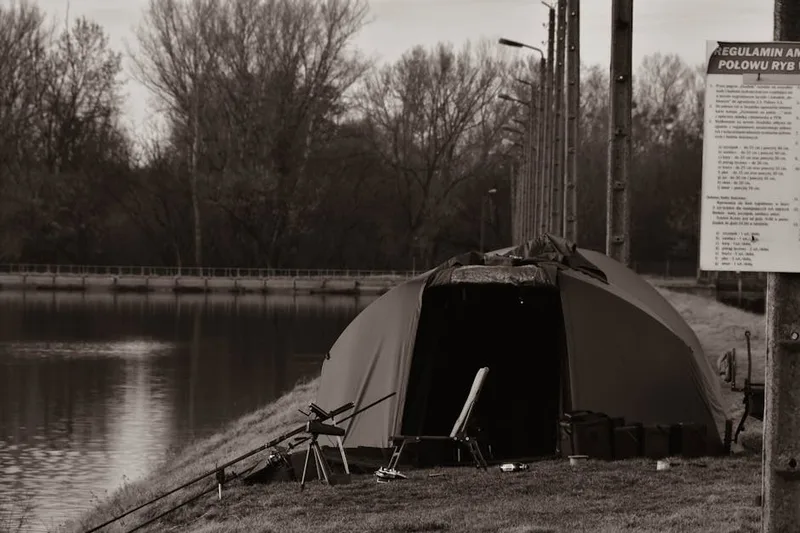
A premium 2-man carp fishing bivvy designed for serious session anglers - View Product Details
Back in 2019, I made my first bulk order of 300 bivvies from a factory in Qingdao. To be honest, I was nervous. That's a lot of inventory to move. But within eight months, I'd reordered twice.
The demand was there, and more importantly, the margins were better than almost anything else in my catalog.
Here's what I've learned since then: the 2-man bivvy market isn't just about selling tents.
It's about understanding what anglers actually need when they're spending 48 hours on the bank, and making sure your retail partners can deliver that solution profitably.
For retailers looking to expand their inventory, our premium bivvy collection offers excellent margins and proven quality.
Why 2-Man Bivvies Should Be Your Next Big Product Line
Look, I know what you're thinking. "It's just a fishing tent." But that's where most distributors get it wrong. A quality 2-man bivvy represents a significant purchase decision for anglers. We're talking £350-700 retail.
And when someone drops that kind of money, they don't just buy the shelter, they buy the overwrap — the groundsheet, the porch extension. The lifetime value of a bivvy customer is substantial.
From a pure numbers perspective, here's what attracted me to this category:
- Healthy margins: Wholesale prices typically run £140-450, with retail spreads of 40-60%. Try finding that in hooks or line.
- Predictable demand: Unlike seasonal baits that spike and crash, bivvies sell steadily year-round. January through March is actually my strongest quarter as anglers prep for the season.
- Repeat business: Sell someone a quality bivvy with matching bedchair, and they'll be back for bedchairs, sleeping bags, cookware, the whole ecosystem.
- Lower return rates: Compared to electronics or rods, properly spec'd bivvies have minimal warranty issues if you source right.
The global market data backs this up. Carp fishing participation is growing steadily across Europe and North America, and the "session angler" demographic, those guys doing 24-72 hour trips, is expanding fastest.
These are exactly the customers who need 2-man shelters. According to FAO fisheries data, recreational angling continues to show strong growth trends globally.
What I've Learned About Sourcing Quality
My first container of bivvies taught me some expensive lessons. I went with the cheapest factory quote, thinking I'd maximize margins. Big mistake. The frame joints started failing after three months, and I spent more on warranty claims than I'd saved on the initial order.
Now I evaluate every potential manufacturer on three non-negotiables:
The Frame Makes or Breaks the Product
You can have the best fabric in the world, but if the frame collapses in a moderate wind, your customers will blame you — not the factory 5,000 miles away.
After testing dozens of samples, here's what I look for:
- 7001-T6 aluminum alloy minimum. Anything less bends too easily.
- Geared tension systems rather than simple push-fit. Yes, they cost more, but the setup experience is night and day.
- Joint construction that doesn't rely solely on plastic inserts. Metal-to-metal connections last.
- Replacement parts availability. Because stuff breaks, and you need to support your retailers.
The Fox ETS BOSS system, for example, costs about 15% more to manufacture than basic tension frames, but my return rate on those models is virtually zero. That's worth the investment.
Fabric Quality Is More Than a Waterproof Rating
Every factory will tell you their fabric is "5,000mm hydrostatic head." That's table stakes. What separates good bivvies from great ones happens in the details most distributors never check.
I learned this the hard way when a batch of supposedly premium fabric started delaminating after six months of UV exposure. Now I always request:
- Actual fabric samples, not just spec sheets. I take them home and abuse them.
- UV resistance testing data. Cheap PU coatings degrade fast in real sunlight.
- Seam construction samples. Taped seams should be uniform, not patchy.
- Color consistency across production runs. Nothing says "cheap" like mismatched panels.
210D-420D Oxford with quality PU coating hits the sweet spot for most markets. Lighter for mobility-focused anglers, heavier for the "set up and leave it" crowd.
Minimum Orders and Production Realities
Here's where your relationship with factories really matters. Standard MOQs run 200-500 units per model, but everything is negotiable, especially if you're willing to commit to multiple orders.
My current arrangement with my main manufacturer: I commit to 1,000 units annually across three models, and they give me priority production slots during peak season. That flexibility is worth more than a slightly lower per-unit price.
Realistic timelines to plan around:
- Initial sampling: 2-3 weeks
- Production: 45-60 days after order confirmation
- Sea freight: 25-35 days to European ports
- Customs clearance: 5-10 days
If you're targeting spring season launch, you need orders placed by October. I learned that lesson missing a season because I thought November was "plenty of time."
The Quality Control Reality Check
Here's something most distributors don't talk about: factory inspections aren't optional. They're essential.
I use third-party inspection services for every shipment now. Costs about $300 per container, but it's saved me thousands. My inspector checks:
- Random sampling of frame components, looking for metal fatigue, poor welds, inconsistent threading
- Fabric consistency across the production run, color matching, coating uniformity, seam quality
- Waterproofing verification, actual spray testing, not just paperwork
- Packaging integrity, because damaged boxes become your retailer's problem
One inspection caught a batch where the factory had substituted a cheaper fabric to save costs. Caught it before shipment, avoided a disaster.
On compliance: if you're selling into EU markets, you need REACH documentation. Full stop. I've seen shipments held at customs for weeks over missing paperwork.
Get your manufacturers to provide complete certification packages upfront, material safety data, flammability testing, the works. For complete shelter solutions, check our bivvy accessories range including overwraps and groundsheets.
Logistics: The Part Nobody Likes But Everyone Has to Deal With
Container optimization matters more than you'd think. A 40HQ holds roughly 250-300 bivvies depending on model and packaging. But here's the trick: mix in complementary products.
I typically run 60% bivvies, 30% bedchairs, 10% accessories in my containers. The bedchairs protect the bivvies during shipping, and I get better overall freight cost per unit.
HS classification caught me out once. Fishing shelters can fall under different codes depending on construction, 6306.22 for synthetic fiber tents is standard, but always verify with your customs broker. Duty rates vary significantly by destination country, and you don't want surprises.
Timing-wise, here's my calendar:
- October: Place spring season orders
- November-December: Production and inspection
- January: Shipment arrives, customs clearance
- February: Stock positioned for spring launch
Miss that October window, and you're scrambling. I've been there. Not fun.
My Advice? Start Smart, Then Scale
If you're new to bivvy distribution, resist the urge to go big immediately. Start with a single model from a proven manufacturer. Learn the logistics, understand your market response, build relationships.
My first order was 200 units. Modest. But it let me test quality, pricing, and demand without betting the farm. When those sold through in four months, I knew I had something.
Now I move 2,000+ bivvies annually across multiple models and price points. But that growth was deliberate, built on understanding what works in my specific markets.
The manufacturers who've become long-term partners share common traits: they communicate honestly about production issues, they stand behind their quality claims, and they're flexible enough to work with growing distributors.
Look for factories that treat your business as a partnership, not just a transaction. Those relationships become your competitive advantage when supply chains get tight, which they inevitably do.
Sources & Industry References
- Carpology Magazine , Leading European publication for carp fishing gear reviews and industry news
- International Game Fish Association (IGFA) , World records, fishing standards, and angling regulations
- Statista: Fishing Industry Data , Market size, trends, and consumer spending on fishing equipment
Ready to Source Quality 2-Man Bivvies?
AnglinGear works with retailers and distributors across Europe. Let's discuss how we can support your 2026 product lineup.
Get in Touch